
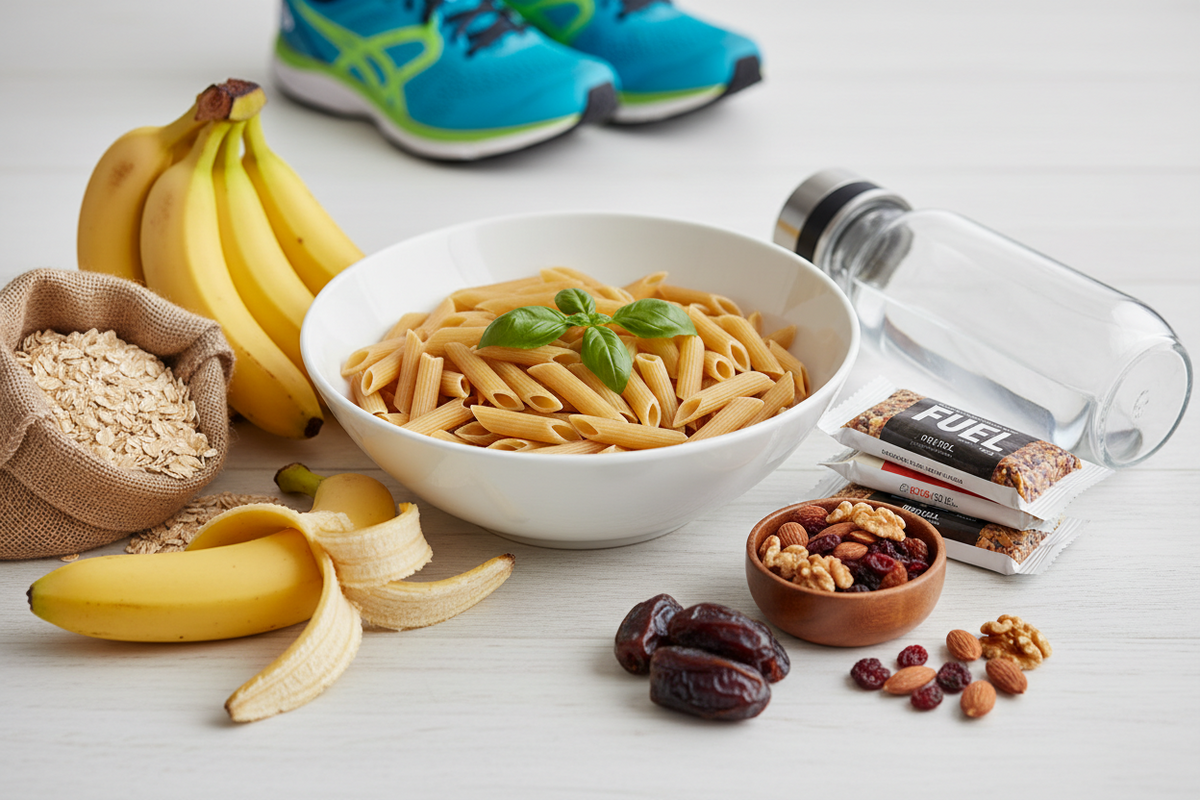
Before a run, eat a full meal two to three hours ahead, or a small, easy-to-digest carb snack such as a banana 30 to 60 minutes before. During a run, you only need to refuel if you are going for longer than about an hour. Afterwards, have carbs and protein, plus plenty of fluid, within an hour or so to help your body recover.
These are general guidelines rather than rules. Every stomach is different, so test your choices on training runs, stick to foods you know agree with you, and never try something new on race day. If you have a medical condition, check with your doctor before changing how you eat around exercise.
How long before a run should you eat?
You want to start a run feeling neither stuffed nor starving. A heavy meal right before running can cause cramps and side stitches, while running on empty can leave you flat and tired.
- 2 to 3 hours before: a normal, balanced meal.
- 30 to 60 minutes before: a light snack, mostly carbohydrate.
- Early morning runs: if you can't face food at 6am, a banana or a few dates are usually enough for an easy run under an hour.
Best foods to eat before a run
Choose foods that are easy to digest, with carbohydrate for energy and a little protein, and keep fat and fibre low. Good options include:
- Bananas: quick carbs and potassium, easy on the stomach.
- Oats: slow-release carbs for longer runs. Eat them at least an hour before, with yoghurt or a little honey.
- Toast: a slice or two of bread with honey, jam or a thin layer of peanut butter.
- Apple slices with peanut butter: carbs plus a little protein for a moderate session.
- Dates: a handy, natural sugar hit that many runners already have at home.
- A fruit smoothie: blended with milk or yoghurt, with no added sugar.
What should you avoid eating before a run?
Skip anything rich, oily or very high in fibre in the few hours before you head out. That means fried food, creamy or santan-heavy dishes like a big plate of nasi lemak, and large portions of beans, broccoli or cauliflower. They take longer to digest and are the usual culprits behind a stitch or an urgent search for a toilet halfway round. Very spicy food can cause trouble for some runners too.
Do you need to eat during a run?
For runs under an hour, water is enough. For longer efforts, your body starts running low on stored carbohydrate. A common guideline for runs over about an hour is 30 to 60 grams of carbohydrate per hour, taken in small amounts every 10 to 15 minutes. Pick things that are fast to digest:
- Sports drinks, which replace carbs and the electrolytes you lose in sweat.
- Energy gels or chews.
- Dried fruit, dates, raisins or a few gummy sweets. They are cheaper and work just as well for many runners.
Practise fuelling on long training runs so you know what your stomach tolerates.
What should you eat after a run?
Aim to eat within 30 to 60 minutes of finishing, especially after a long or hard run. You are replacing used energy, rebuilding muscle and topping up fluids, so combine carbs and protein. Easy options:
- A glass of chocolate milk.
- Greek yoghurt with fruit.
- Eggs on toast.
- Rice or noodles with chicken, fish or tofu and vegetables, if it's mealtime.
- A protein shake or smoothie when you're short on time.
Leaving it too long can slow your recovery and make your next run feel harder. Recovery is also about rest, so read our guide to rest and recovery days.
How much water should you drink when running?
Drink regularly through the day rather than gulping a lot just before you set off. As a rough guide, drink about 5 to 7 ml of water per kilogram of body weight at least four hours before a run (about 280 to 390 ml for a 55 kg runner), and a little more around two hours before if your urine is still dark. On longer runs, drink when you're thirsty. If you want a plan, weigh yourself before and after a few runs and aim to lose no more than about 2% of your body weight. Our humid Malaysian weather means you sweat more than you might think, so for long runs in the heat, add an electrolyte drink or tablet. Don't overdo plain water, though. Drinking far more than you sweat can be harmful too. After your run, keep sipping until you feel back to normal.
Can you run while fasting?
Many runners keep training during Ramadan by shortening their runs and easing the pace. Popular times are just before berbuka, so you can eat and drink straight after, or an hour or two after buka once you've had a light meal. At sahur, choose slow-release carbs, some protein and plenty of water. Listen to your body, and stop if you feel dizzy or unwell.
What else helps you run better?
Good fuelling makes every run feel better, and so does good technique and kit. If you're just starting out, pair this with our guide to proper running form for beginners. For a sports hijab that stays put and dries fast when you sweat, browse the Najwa Sport range.
Sources
This guide is general advice for healthy adults, not medical advice. It draws on these position statements from sports nutrition and sports medicine bodies:
- Thomas DT, Erdman KA, Burke LM. Nutrition and Athletic Performance, joint position statement of the Academy of Nutrition and Dietetics, Dietitians of Canada and the American College of Sports Medicine. Medicine & Science in Sports & Exercise, 2016. Timing of meals, fuelling and recovery.
- Kerksick CM et al. International Society of Sports Nutrition position stand: nutrient timing. Journal of the International Society of Sports Nutrition, 2017. About 30 to 60 grams of carbohydrate per hour in sessions longer than an hour, and protein after exercise.
- American College of Sports Medicine. Exercise and fluid replacement, position stand. Medicine & Science in Sports & Exercise, 2007. Drinking before and during exercise, and when an electrolyte drink helps.
- Hew-Butler T et al. Statement of the Third International Exercise-Associated Hyponatremia Consensus Development Conference. Clinical Journal of Sport Medicine, 2015. Why drinking far more than you sweat is harmful.




3 comments
so nice!
yummy i like it
very delicious, should try at home